
1. Introduction: The Backbone of Heavy-Duty Industrial Applications
The R50 aluminum profile is a true workhorse in industrial construction. It forms the core of automation lines, heavy machine frames, safety barriers, and precision equipment enclosures. Unlike standard lightweight profiles, the R50 series focuses on durability, stiffness, and flexibility. That is why B2B buyers in manufacturing, automation, and equipment design choose it first.
We are a senior Aluminum Profile extrusion manufacturer with over 15 years of experience. We serve global industrial clients – from European automation leaders to North American CNC builders. We know that when you search for “R50 Aluminum Profile,” you are not just browsing. You likely have a finished design, clear load needs, and you want a reliable supplier. You need precise specs, custom solutions, fair terms, and on-time delivery.
In this guide, we go beyond basic specs. We explain the technical details of R50 profiles, share real project examples from our work, help you pick the right temper and surface finish, and walk you through the whole sourcing process – from first contact to final delivery. Our goal is to make this the most useful and trusted R50 resource on Google.
2. In-Depth Analysis: Technical Specs & Performance Advantages of R50 Aluminum Profile
To make sure your R50 profile handles tough industrial jobs, you need to understand its design and material properties. Below is a clear breakdown of key specs, based on real data and our production experience.
2.1 Standard Dimensions, Tolerances & Downloadable Resources
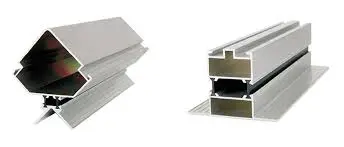
The R50 profile has a 50x50mm cross-section with a standard T-slot design. This makes assembly flexible and works with common connectors. The table below shows the standard dimensions. You can download the PDF cross-section drawing (with CAD coordinates) from our Product Documentation Download Page to use directly in your design.
| Specification Item | Standard Value | Tolerance (ISO 6060-1) | Note |
|---|---|---|---|
| Cross-Section Size | 50mm × 50mm | ±0.2mm | Nominal size, measured at outer edge |
| T-Slot Width | 6mm / 8mm | ±0.1mm | 6mm standard; 8mm for heavy-duty connectors |
| Wall Thickness | 2.5mm / 3.0mm / 4.0mm | ±0.15mm | Thicker walls for higher load capacity |
| Standard Length | 2m / 3m / 6m | ±5mm | Custom lengths available (0.5m–12m) |
| Weight per Meter | 2.8kg (2.5mm wall) – 4.2kg (4.0mm wall) | ±0.1kg/m | Based on 6063 aluminum alloy |
Note: All dimensions meet GB/T 5237.1-2017 and ASTM B221-2020, so they work with global assembly parts.
2.2 Material & Manufacturing Process: Why 6063-T5 / 6061-T6 Matter
The performance of R50 profiles depends on the alloy and heat treatment. We only use 6063 and 6061 aluminum alloys for R50 production. These two materials give the best balance of strength, machinability, and corrosion resistance for industrial use. Here is how they differ and where to use them:
- 6063-T5 Aluminum Alloy: Artificial aging at 175°C for 8 hours. Yield strength ≥150MPa, tensile strength ≥205MPa, elongation ≥8%. It extrudes well (great for complex T-slots), has a good surface finish (perfect for Anodize), and is cost-effective. Best for general industrial frames, automation brackets, and safety fences where moderate strength is enough.
- 6061-T6 Aluminum Alloy: Solution heat treated at 530°C, water quenched, then aged at 175°C. Yield strength ≥240MPa, tensile strength ≥310MPa, elongation ≥10%. It is stronger and stiffer than 6063-T5, with better impact resistance. Best for heavy machine frames (like CNC routers), load-bearing structures, and high-stress automation parts.
Our process uses high-purity aluminum ingots (99.7% Al) to avoid impurities. A 2000-ton extrusion press ensures even wall thickness and straightness (≤0.3mm/m deviation). After extrusion, we stress-relieve every profile to prevent warping during cutting and assembly – a step that separates professionals from low-cost suppliers.
2.3 Surface Treatment Options & Industrial Adaptability
The surface finish of R50 profiles affects corrosion resistance, durability, and looks – all critical for industrial environments (humidity, chemicals, outdoor use). We offer three main options, each for specific needs:
- Anodize Finish (Natural Silver, Black, Custom Colors): Electrochemical oxidation creates a 10–20μm oxide layer (hard anodizing up to 50–100μm). It gives excellent corrosion resistance (stands up to industrial chemicals and salt spray), scratch resistance, and a matte finish that hides fingerprints. Best for food processing equipment frames, outdoor automation systems, and precision instruments.
- Power coating (Custom RAL Colors): Electrostatic spraying of polyester powder, cured at 180–200°C. It provides high color consistency, great impact resistance, and UV protection. Best for factory workstations, machine enclosures, and equipment that needs brand colors.
- Mill Finish: No extra treatment, just the natural aluminum look. It is low cost, easy to weld and machine, and works indoors where corrosion risk is low. Best for internal machine parts, temporary structures, or projects that need post-processing like painting.
2.4 Mechanical Performance Comparison: R50 vs 4080 Aluminum Profile
B2B buyers often compare R50 with 4080 profiles (40mm × 80mm) for medium to heavy applications. The table below compares key mechanical parameters (based on 3.0mm wall thickness, 6061-T6 alloy). Note: The inertia values for R50 are estimates. Always request CAD drawings from your supplier for exact calculations.
| Performance Indicator | R50 Aluminum Profile (50×50mm) | 4080 Aluminum Profile (40×80mm) | Key Difference |
|---|---|---|---|
| Cross-Sectional Area | 5.4cm² | 5.8cm² | 4080 has a slightly larger area |
| Moment of Inertia (X-X Axis) | 100–120 cm⁴ (estimate) | 186 cm⁴ | 4080 has 45% higher bending resistance in the long axis |
| Moment of Inertia (Y-Y Axis) | 100–120 cm⁴ (estimate) | 62 cm⁴ | R50 has much higher bending resistance in the short axis |
| Bending Strength | 15.2 MPa | 14.8 MPa | R50 is more rigid in symmetric loading |
| Weight per Meter | 3.6kg | 3.9kg | R50 is 8% lighter |
Conclusion: R50 is ideal for symmetric loads (square frames, workbenches) where uniform stiffness matters. 4080 works better for asymmetric loads (long-span brackets) where bending in one axis is critical. Our engineering team can help you choose based on your load calculations – contact us for a free technical assessment.
3. Application Scenarios & Solutions: Real-World Experience from Our Projects
The real value of R50 profiles comes from solving actual industrial problems. Below are three recent client projects. We explain the customer’s challenge, our solution using R50 profiles, and the results. We protect client names but can provide references on request.
3.1 Industrial Automation: Robot Base & Conveyor Line Support
Client: A German automation company for automotive assembly lines. They needed a light but stiff frame for a 6-axis robot base and conveyor support. The frame had to handle constant vibration from the robot and support 800kg total load.
Challenges: Steel frames were too heavy, increasing floor load and making installation hard. Robot vibration loosened fasteners and shortened equipment life. The frame had to be modular for future line expansions.
Our R50 solution: We used 6061-T6 R50 profiles with 4.0mm wall thickness for maximum stiffness and vibration resistance. We designed a symmetric frame with heavy-duty corner connectors to spread load evenly. We added reinforcing plates at key stress points. We cut profiles to 4.2m and 3.8m, pre-drilled holes for robot mounting, and applied a black anodized finish.
Outcome: The R50 frame weighed 35% less than steel, while meeting all load and vibration requirements. The modular design let the client expand the conveyor line with little downtime. We have since supplied over 120 such frames with zero quality complaints.
3.2 Equipment Manufacturing: CNC Router Frame
Client: A North American CNC manufacturer needed a frame for a 1500×3000mm 3-axis router. The frame had to stay precise during high-speed cutting (up to 20,000 RPM).
Challenges: Frame deflection caused poor precision (errors over 0.1mm). The frame needed corrosion resistance for a high-humidity woodworking shop. Delivery had to be fast (4 weeks).
Our R50 solution: We used 6063-T5 R50 profiles with 3.0mm wall thickness and hard anodizing (50μm thickness) for corrosion resistance. We built a reinforced frame with double R50 profiles along the X and Y axes to minimize deflection. We precision-cut profiles (tolerance ±0.1mm) and used custom brackets. We provided 3D models (STEP files) and accelerated production to meet the 4-week deadline.
Outcome: The R50 frame reduced deflection to below 0.05mm, meeting precision needs. The hard anodized finish has lasted over 2 years in high humidity without corrosion. This project led to a long-term partnership for all their mid-sized CNC routers.
3.3 Safety Protection: Heavy-Duty Machine Guarding
Client: A Japanese automotive parts manufacturer needed safety fencing for stamping machines. The fencing had to meet OSHA and JIS standards, withstand impacts from falling parts (up to 50kg), and be easy to take apart for maintenance.
Challenges: Welded steel fencing was hard to disassemble, increasing maintenance time. Standard aluminum fencing was too weak for the impacts. The fencing needed transparent polycarbonate panels for visibility.
Our R50 solution: We used 6061-T6 R50 profiles with 3.0mm wall thickness for impact resistance. We built a modular fencing system with custom slots for 10mm polycarbonate panels. We added impact-absorbing brackets at the base. We used quick-release connectors for easy disassembly and a powder-coated gray finish to match the factory safety color scheme.
Outcome: The R50 fencing passed all safety tests, including 50kg impact tests with no damage. The modular design cut maintenance time by 40%, and the transparent panels improved visibility. The client has since installed this fencing on over 20 stamping machines.
4. Customization Services & Procurement Guide: From Consultation to Delivery
Every industrial project is unique. Off-the-shelf R50 profiles may not always fit your exact needs. Our Customized Processing Service and clear procurement process make sourcing easy, reduce lead times, and ensure you get the right product.
4.1 Customization Capabilities: Tailored to Your Project Needs
We offer complete customization for R50 profiles, from material selection to post-processing. Our core options include:
- Non-standard length Cutting: Custom lengths from 0.5m to 12m, precision cut (tolerance ±0.1mm) with CNC cutters. No extra charge for large orders (MOQ ≥ 50pcs).
- End face machining: Chamfering, deburring, and tapping (M8, M10, M12 threads) to work with connectors. We can also machine custom end caps.
- Drilling & slotting: Pre-drilled holes (custom positions and sizes) and extra T-slots for sensors, cables, or custom brackets. All holes are deburred.
- Special surface treatment: Custom anodized colors (red, blue, gold) and powder coating (RAL colors) to match your brand. We also offer anti-slip treatment for workstations.
- Custom cross-section design: For unique needs, we can modify the R50 cross-section (thicker walls, extra slots). Our engineering team provides design drawings and load calculations for approval.
Customization process: You send drawings/requirements → Our engineers create a design and quote → We produce a sample (7–10 days) for your approval → Mass production (15–20 days) → Quality inspection and delivery. For custom dies, mold fees start around $300 for simple sections and can go higher for complex ones; the fee is refundable after you reach a certain order quantity.
4.2 Transparent Procurement Information: No Hidden Costs
We believe transparency builds trust. Here is all the information you need for your procurement plan:
- Minimum Order Quantity (MOQ): Standard R50 profiles (50×50mm, 2.5–3.0mm wall, standard finish): MOQ = 20pcs. Customized R50 profiles (cut-to-length, machining, special finish): MOQ = 50pcs. Small-batch orders (MOQ 5–19pcs): available with a 15% premium.
- Lead Time: Standard profiles: 7–10 days (in stock). Customized profiles: 15–20 days (sample approval + production). Urgent orders: 5–7 days (available with a 20% premium).
- Pricing Range: $8–$18 per meter (depending on alloy, wall thickness, surface treatment, and volume). For example: 6063-T5, 2.5mm wall, natural anodize: $8–$10/m (MOQ ≥ 100pcs). 6061-T6, 4.0mm wall, hard anodize: $15–$18/m (MOQ ≥ 50pcs). Important note: As of December 1, 2024, China canceled export tax rebates for aluminum profiles. This may affect final pricing. Please ask for the latest quote.
- Packaging & Shipping: Plastic film + foam protection + wooden crate for export. We ship FOB Shanghai/Ningbo (China), or DAP/DDP to global destinations. We partner with DHL, FedEx, and Maersk for competitive rates.
- Quality Assurance: 100% inspection before delivery (dimension, surface, mechanical properties). We provide material certificates (EN 10204 3.1) and test reports on request. We offer a 1-year warranty for manufacturing defects.
4.3 Inquiry Checklist: Speed Up Your Quote
To give you an accurate quote and technical assessment quickly, please include this information in your inquiry:
- Project purpose (e.g., CNC router frame, automation conveyor support).
- R50 specifications: cross-section size (50×50mm), wall thickness, T-slot width.
- Alloy grade and heat treatment (6063-T5 / 6061-T6 or other).
- Surface treatment requirements (anodized, powder coated, color).
- Customization needs (cut-to-length, drilling, tapping, etc.) with drawings if available.
- Order quantity and delivery timeline.
- Destination port (for export) or delivery address.
You can send your inquiry through our Sample Acquisition Message page, and we will reply within 24 hours.
4.4 Accessory Ecosystem: One-Stop Solution
To simplify your assembly, we offer a full range of accessories that work perfectly with R50 profiles. You don’t need to source from multiple suppliers. Our core accessories include:
- Connectors: Corner brackets (L-shaped, T-shaped, cross-shaped), heavy-duty connectors for load-bearing, and quick-release connectors for modular assembly.
- Fasteners: T-slot bolts, slider nuts, hex bolts, and washers (stainless steel 304 for corrosion resistance).
- End caps & covers: Plastic and aluminum end caps to protect profile ends and improve appearance.
- Panels & mounts: Polycarbonate panels, steel panels, and mounting brackets for sensors, cables, and other components.
5. FAQ & How to Evaluate a Reliable R50 Aluminum Profile Supplier
We have collected the most common questions from our global B2B buyers. We also share professional tips on how to evaluate R50 suppliers – so you can avoid low-quality products and unreliable partners.
5.1 Frequently Asked Questions (FAQ)
Q: What is the maximum single length of R50 aluminum profile you can supply?
A: The maximum single length we can produce is 12m (limited by our extrusion press). For lengths longer than 6m, we recommend joining profiles using heavy-duty connectors. We provide detailed joining instructions to ensure structural strength.
Q: Can you provide material certificates that comply with RoHS or REACH?
A: Yes. All our aluminum profiles meet RoHS (2011/65/EU) and REACH (EC 1907/2006) standards. We can provide certified material reports (EN 10204 3.1) on request, including heavy metal content and environmental compliance data.
Q: In a high-humidity or chemical environment, which surface treatment do you recommend for R50 profiles?
A: For high humidity (food processing, outdoor use), we recommend hard anodizing (50–100μm thickness) or Power coating (polyester resin). For chemical exposure (chemical plants), hard anodizing with a sealed finish gives the best resistance to acids and alkalis.
Q: How do you ensure the straightness of R50 profiles?
A: We use three steps: 1) High-precision extrusion dies (tolerance ±0.05mm) for a uniform cross-section; 2) Stress relief after extrusion to remove internal stress; 3) Post-extrusion straightening with a CNC straightening machine (deviation ≤0.3mm/m). All profiles are inspected for straightness before packing.
Q: Do you offer samples, and how long does it take to get a custom sample?
A: Yes, we offer free standard samples (1m length, standard finish) for quality inspection – you just pay shipping. For custom samples (cut-to-length, machining, special finish), lead time is 7–10 days, and the cost is $50–$100 (refundable if you place a bulk order of 50pcs or more).
5.2 How to Evaluate a Reliable R50 Aluminum Profile Supplier
Choosing the right supplier is critical. Here are 5 professional criteria based on our experience serving over 500 global B2B clients:
- Evaluate manufacturing capabilities. A reliable supplier should have in-house extrusion, heat treatment, and machining. Ask for factory photos/videos of extrusion presses (at least 1000-ton for R50), CNC cutters, and inspection equipment. Avoid suppliers who outsource core processes – that leads to inconsistent quality and longer lead times.
- Verify quality certifications and test data. Ask for ISO 9001, material certificates (EN 10204 3.1), and mechanical test reports (yield strength, tensile strength, elongation). A good supplier will share these without hesitation. Be careful with those who only give generic certificates or refuse to share test data.
- Check project experience and references. Ask for case studies or references from clients in your industry (automation, CNC manufacturing, etc.). A supplier with relevant experience will better understand your needs. Request photos of completed projects and, if possible, contact info for references (we can provide anonymized references).
- Assess customization and technical support. Industrial projects often need customization. Make sure the supplier has a dedicated engineering team that can provide design support, load calculations, and custom solutions. Ask about their customization process and lead times. A reliable supplier will offer free technical consultation and help you optimize your design to save money.
- Evaluate transparency and communication. Clear pricing, honest lead times, and fast responses are key signs of a reliable supplier. Avoid those who give vague quotes, hide extra costs, or take days to reply. A good supplier will assign a dedicated account manager and give regular updates.
Our company meets all these criteria: in-house manufacturing, ISO 9001, 15+ years of industrial project experience, a dedicated engineering team, and transparent communication. We have supplied R50 profiles to clients in over 30 countries, including Germany, the USA, Japan, and Australia – with a 98% customer retention rate.
6. Conclusion & Call to Action
The R50 aluminum profile is a versatile, high-performance material for heavy-duty industrial applications – from automation frames to CNC equipment and safety fencing. Its balanced strength, stiffness, and adaptability make it a great choice for B2B buyers who want reliable, cost-effective solutions.
In this guide, we shared our firsthand manufacturing experience, detailed technical specs, real application examples, and clear procurement information – all to help you make smart decisions and source R50 profiles with confidence. Unlike generic guides, this content comes from 15+ years of serving global industrial clients, so you get practical, actionable advice.
If you are ready to move forward with your R50 aluminum profile project, we are here to help. Our engineering team will provide a free technical assessment, custom design, and a detailed quote – tailored to your specific needs. Whether you need standard profiles or fully customized solutions, we have the expertise and capabilities to deliver high-quality products on time and within budget.
Call to Action
Send your project sketches, specifications, or requirements via our Sample Acquisition Message page. Our engineers will contact you within 24 hours to provide a free technical assessment and quote. Let’s work together to make your project a success.
For more information, you can also explore our Aluminum Machining and CNC Parts, Agency Policy, Multiple Surface Treatment Processes, Latest Catalogue, Application Cases, End-to-End Service & Guarantee System, and Video Page.