
LED strip aluminum profiles help cool LED chips, hold the strip, and shape the light. BRILLIANCE at hhalum.com brings over 21 years of extrusion and aluminum profile experience. We make standard and custom profiles for projects worldwide. This guide helps buyers and engineers choose the right profile, test thermal performance, plan waterproofing, and request samples or CAD files.
Why use aluminum profiles for LED strips
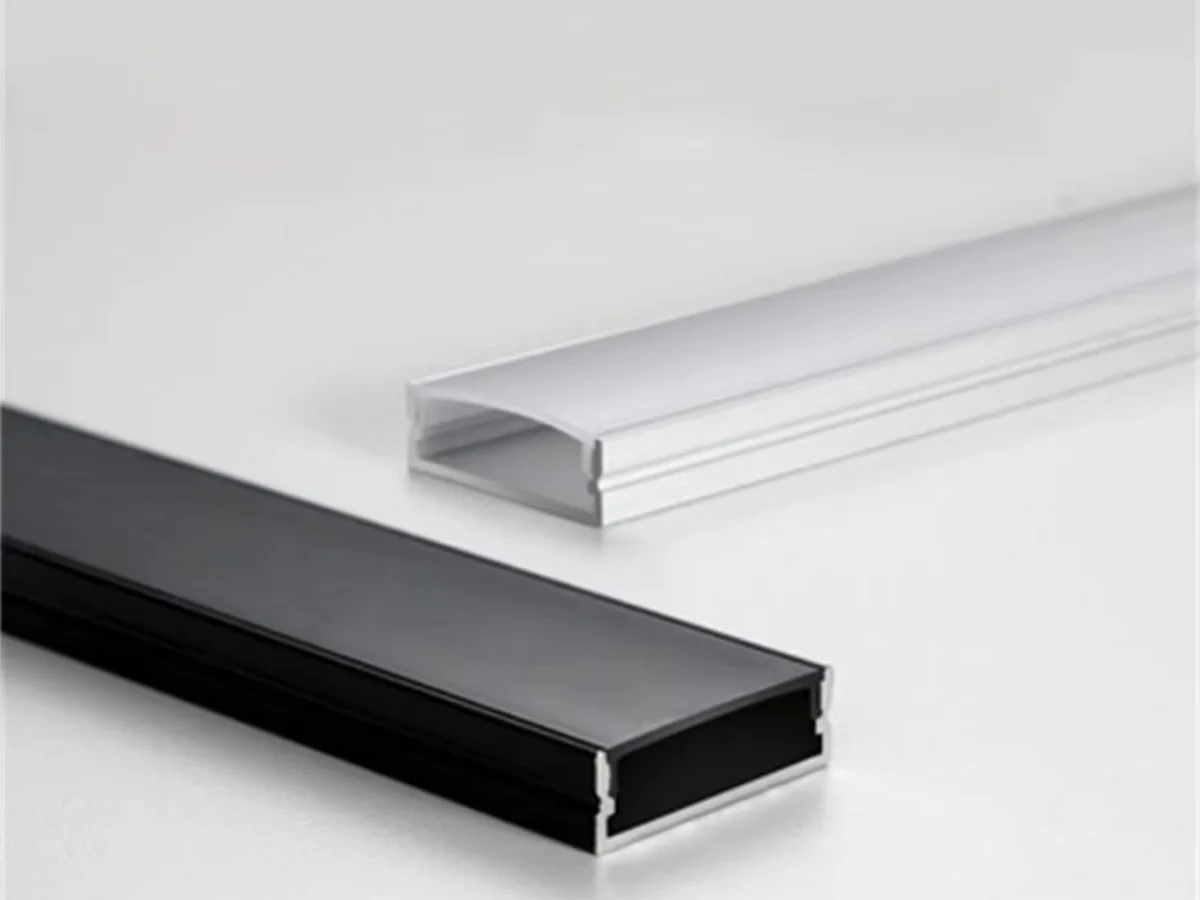
An aluminum profile acts as a heat sink and a mounting channel. It lowers LED junction temperature and extends lifetime. It also hides wiring and holds a diffuser for even light. Most profiles use 6063-T5 alloy. For surface finish, we offer Anodize and Power coating. You can see more surface options on Multiple Surface Treatment Processes.
Profile types and common uses
BRILLIANCE supplies many profile types. Choose by installation and project needs.
Surface-mounted profiles: quick to install. Use them for cabinets, displays, and furniture.
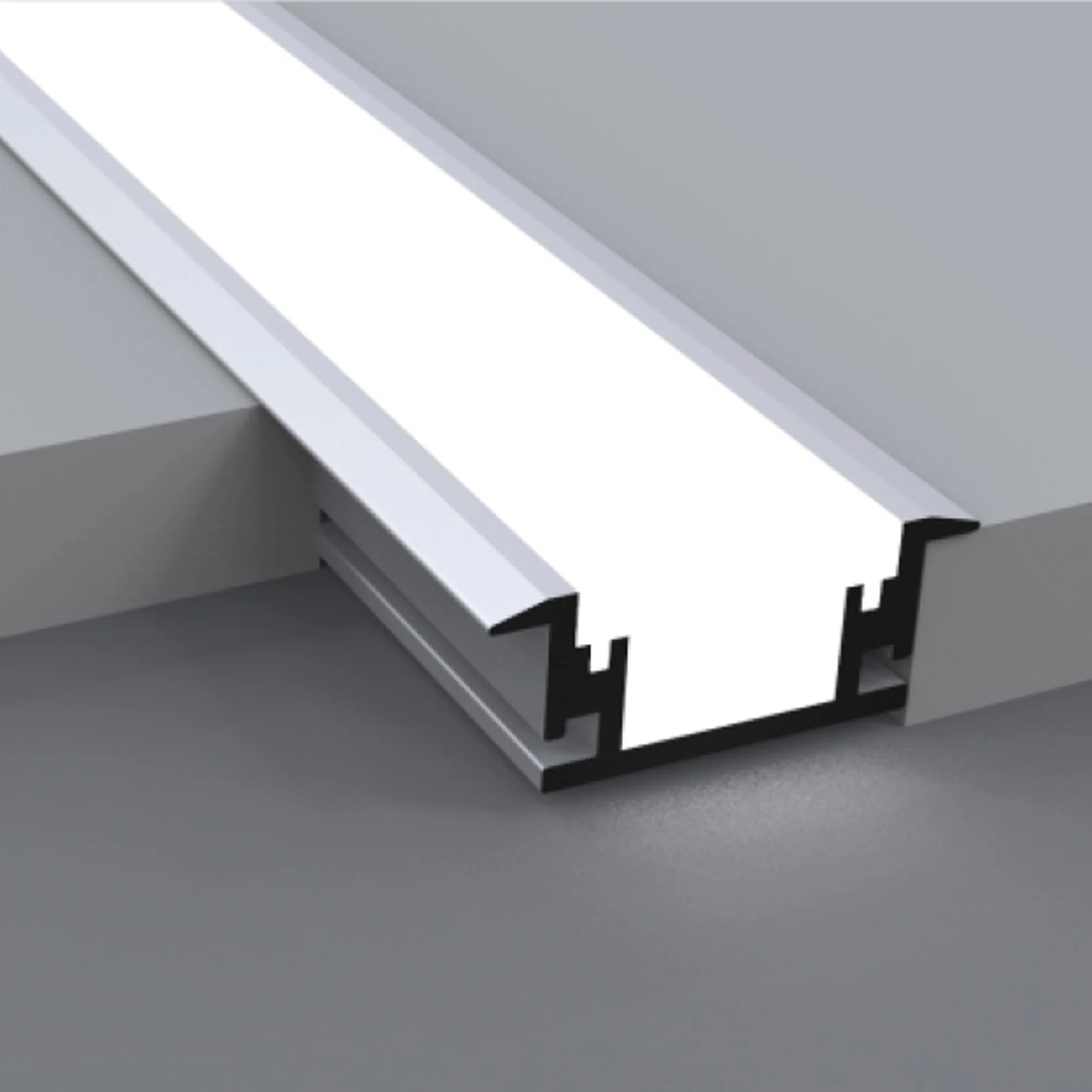
Recessed profiles: fit into slots or channels. Use them in ceilings, walls, and furniture for clean, hidden lines.
Corner profiles: fit at edges and corners for accent and cove lighting.
Round and decorative profiles: use for curved or design-focused installations.
Waterproof profiles: use for outdoor and wet areas. They include silicone seals and special end caps for IP65 or IP67 protection.
BRILLIANCE can also deliver matching accessories: diffusers, end caps, seals, mounting clips, and connectors. See real projects at Application Cases.
Key selection points for buyers and engineers
Match the profile to the LED strip and environment. Check these items:
Straight channel width: inner width should be at least the strip width plus 0.5 mm. Allow 0.5–1.0 mm for ease of fit and thermal expansion.
Profile cross-section and wall thickness: larger sections and thicker walls increase heat dissipation. Typical wall thickness is 0.8–2.0 mm.
Attachment style: some strips are back-mounted, others side-mounted. Back-mounted strips need better thermal path to the profile. Use thermal tape or pads when needed.
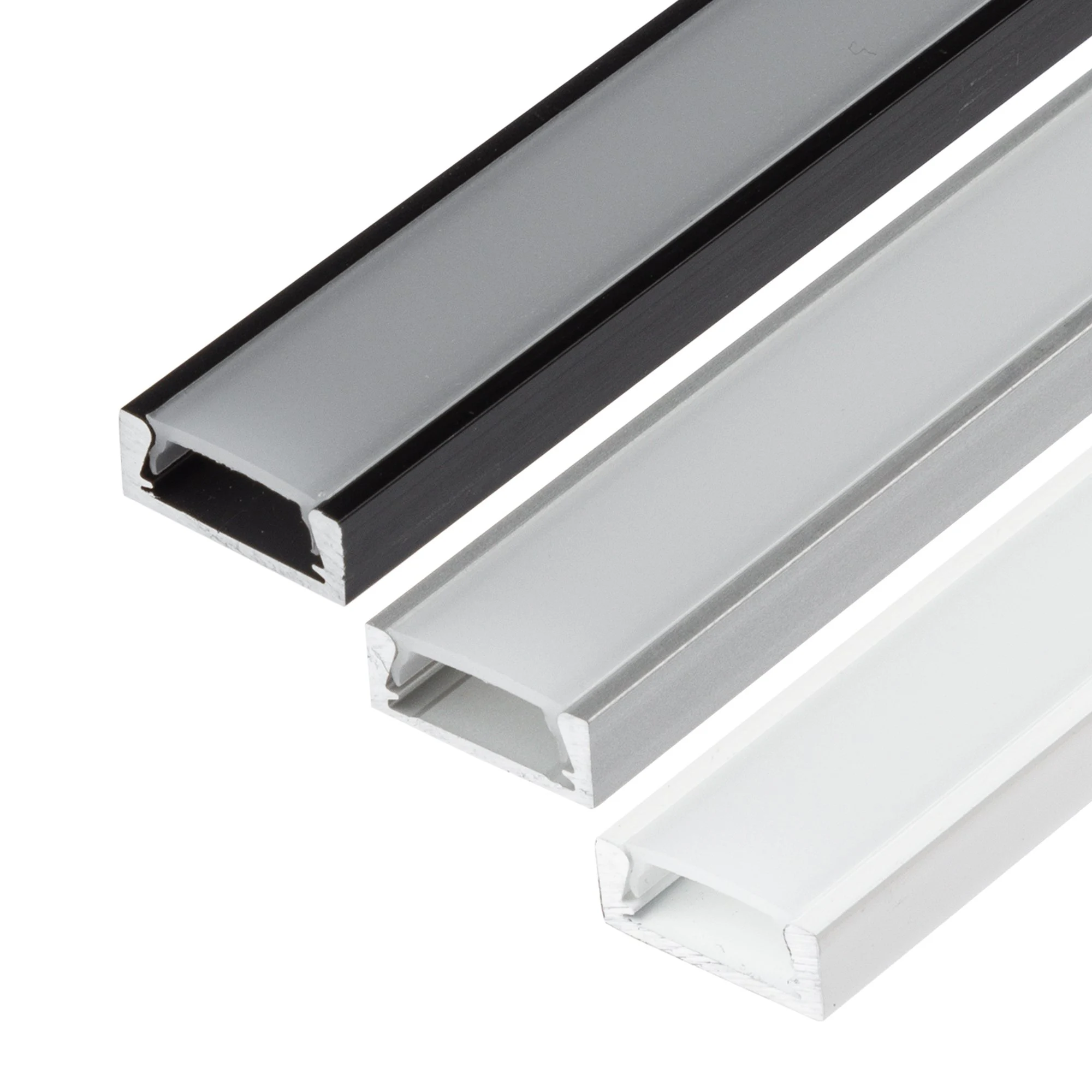
Diffuser material and finish: PC diffusers come in opal, frosted, or clear. Opal diffusers give uniform light. Clear diffusers keep higher lumen output.
Surface finish: choose Anodize, Power coating, Polish, Brushed, or Wood marble grain finishes based on design and durability needs.
Ingress protection: use silicone seals and waterproof end caps for IP65. For IP67 and immersion, seal full runs and cable joints carefully.
Typical channel recommendations
| LED strip width (mm) | Recommended inner channel width (mm) | Notes |
|---|---|---|
| 8 | 9–10 | Fit small strips; use narrow diffuser |
| 10 | 11–12 | Common choice; use 12 mm for easier install |
| 12 | 13–14 | Good for brighter strips and better cooling |
| 15 | 16–18 | Use for higher power strips and COB types |
Thermal management and best practices
The profile moves heat from the LED chips to air. Lower temperature slows lumen loss and avoids failures. Follow these rules:
Use a larger cross-section for high-power strips. Add fins or a larger contact area when needed.
Use thermal tape or pads between strip and profile to reduce interface resistance. Back-mounted strips need this more than side-mounted ones.
Test samples under real load and measure case and junction temperatures. If needed, run a short thermal simulation or offer sample tests for verification.
Waterproof solutions for outdoor and wet locations
A waterproof system includes the aluminum profile, a silicone seal, waterproof end caps, and a sealed cable entry. Use corrosion-resistant fasteners for coastal or harsh sites.
IP65 is fine for rain and splashes. For immersion or buried runs, use IP67 and make sure cable joints and ends are fully sealed.
Accessories and technical deliverables
Accessories: diffusers, end caps, mounting clips, thermal pads, sealing strips, connectors, and angle connectors.
Technical files: BRILLIANCE provides DWG, STEP, IGES, and Revit (BIM) files. Request CAD and documentation on the Product Documentation Download Page.
For CNC parts or custom machining, see Aluminum Machining and CNC Parts. For custom extrusion and processing, see Customized Processing Service.
Customization, MOQ, lead time, and quality control
BRILLIANCE has factories and supply chains in Guangdong and Shanghai. We support extrusion mold making, secondary machining, and surface work. We can cut, Cutting, Drilling, Bending, Welding, and Punching on request.
Custom extrusion needs a mold. Mold cost depends on shape. Typical MOQ ranges from 1,000 to 3,000 meters. Existing profiles can be sampled in small batches.
Sample time: 7–14 days for stock molds. Molded sample: 15–30 days. Production lead time: 2–6 weeks depending on volume and surface finish.
We run dimensional checks and visual inspections. We can provide mill certificates and inspection reports. We recommend a PP sample for new profiles before mass production.
Buying and contract tips
Ask for clear quotes that list unit price per meter, MOQ, mold fees, sample policy, packing, lead time, and payment terms.
Include PP sample approval, material certificates, and packing standards in the purchase contract. BRILLIANCE can support sample testing and acceptance steps.
Packaging and shipping
We pack by meter lengths or boxed bundles. We add anti-scratch film and protective corners. For export, we use reinforced crates or pallets. BRILLIANCE can advise on FOB, CIF, or DDP shipping.
Project examples
Hotel lobby linear lighting: recessed profiles with opal diffusers gave a clean, continuous line and low maintenance. See related Application Cases.
Retail and cabinet lighting: surface profiles speed assembly and standardize the BOM.
Building outline lighting: waterproof profiles with stainless fittings withstand weather and lower upkeep.
How to request samples, CAD, or a quote
Use the sample request link: Sample Acquisition Message. Include strip model, width, power per meter, length per piece, total quantity, required profile type, and IP rating.
For catalog and product lists, see Latest Catalogue. For videos and installation demos, see Video Page. For certificates and after-sales details, see End-to-End Service & Guarantee System.
Company and experience
BRILLIANCE has 21+ years in aluminum extrusion. We make many kinds of profiles: building, doors and windows, T-slot and V-slot, marine, aerospace, medical, 3C/5G parts, shower, tile trims, whiteboard, furniture and cabinet, tent, automotive, equipment, solar mounting, curtain rails, and more. See our range at Aluminum Profile.
FAQ
What channel width should I pick for a 10 mm LED strip?
Choose an inner channel width of at least 10.5 mm. A 12 mm channel gives easier installation and room for a diffuser.
How long is the lead time for a custom mold?
Mold making takes about 15–30 days. After PP sample approval, production usually takes 2–6 weeks depending on the order size and surface finish.
Can BRILLIANCE provide CAD and BIM files?
Yes. We provide DWG, STEP, IGES, and Revit files. Download or request them from the Product Documentation Download Page or via sample/quote request.
How do you seal joints for outdoor runs?
Use waterproof end caps, silicone seals, and potting or sealed cable entries. Test sealed joints for rain and salt spray when needed.
What surface finishes are available?
We offer Anodize, Power coating, Polish, Brushed, PVDF, and Wood marble grain finishes.
Next steps and call to action
Submit your request at Sample Acquisition Message. Tell us the LED strip model, width, power per meter, quantity, and desired profile style. For custom work, see Customized Processing Service. For machining needs, visit Aluminum Machining and CNC Parts.
Explore our Latest Catalogue and request CAD from the Product Documentation Download Page. View projects at Application Cases. Contact BRILLIANCE via the sample link to get a quote, sample, or technical support.